
Powered By



Unexplained bruising or tiny red dots scattered across the skin can be signs of immune thrombocytopenia (ITP). If your child is diagnosed with ITP, you may wonder whether the condition affects children differently than adults.
The basic mechanism of ITP is similar in children and adults. The immune system causes platelets to be destroyed too quickly. It can also interfere with the body’s ability to make new platelets. But how the condition starts, how long it lasts, and how it’s treated can look quite different depending on age.
Let’s break down how pediatric ITP differs from the adult version, covering everything from causes and symptoms to treatment and the long-term outlook.
Sign up to view the results!
 Continue with Facebook
Continue with Email
Continue with Facebook
Continue with Email
ITP is an autoimmune disease in both children and adults. The immune system mistakenly attacks healthy platelets, the blood cell parts that help blood clot. What triggers that immune response tends to differ by age.
Childhood ITP can develop suddenly, sometimes within a few weeks after a viral infection, or less commonly, a few weeks after a vaccination. This is usually called newly diagnosed ITP. It is the most common way ITP first shows up in children. However, for many cases of childhood ITP, the cause is unknown.
Adult ITP tends to develop more gradually and isn’t necessarily linked to a recent infection. It’s more likely to occur as secondary ITP, meaning it develops alongside another condition, such as systemic lupus erythematosus.
Adults are also less likely than children to recover without treatment. This may be because of a more complex immune history and higher rates of other health conditions.
Children and adults with ITP share many of the same bleeding symptoms, since both stem from the same underlying problem: low platelet counts.
Low platelet counts can cause a few different types of bleeding symptoms, including bruising, mucosal bleeding, and petechiae.
Mucosal bleeding happens in moist body linings like the nose, gums, or digestive tract. Petechiae are tiny red or purple pinpoint spots on the skin. They’re often easiest to spot on the arms, legs, trunk, or inside the mouth.
In real life, ITP can look like easy bruising, small clusters of petechiae, nosebleeds, bleeding gums, or blood in the urine or stool.
These symptoms can look nearly the same in children and adults. Bleeding symptoms are reported more often in children at diagnosis. Adults face a higher, though rare, risk of the more serious complication known as intracranial hemorrhage, or bleeding inside the skull.
Doctors need more than numbers on a page to decide on treatment. Bleeding symptoms matter just as much as, if not more than, the actual platelet count.
For adults with newly diagnosed ITP, guidelines generally suggest corticosteroids when the platelet count is below 30,000 per microliter, even if there is no bleeding or only minor bleeding. When the count is 30,000 per microliter or higher, and bleeding is minor, observation is often appropriate. Doctors also consider factors such as age, other health conditions, medications, pregnancy, upcoming procedures, and a person’s overall bleeding risk.
For children with mild or no bleeding, the same guidelines recommend observation, even if the platelet count is low. This reflects how often children recover on their own.
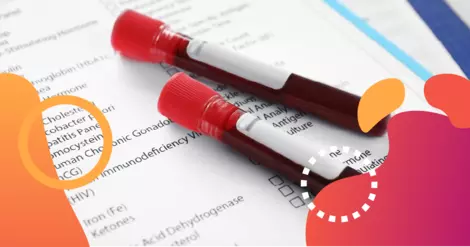
No single test confirms ITP. Instead, doctors diagnose it by ruling out other possible causes of a low platelet count.
For both children and adults, diagnosis usually starts with a complete blood count and a peripheral blood smear, which lets a doctor examine platelets and other blood cells under a microscope. This helps rule out other causes of a low platelet count with no other blood abnormalities, sometimes called isolated thrombocytopenia, like certain infections or bone marrow problems.
If the medical history and blood smear look typical, most people don’t need extensive additional testing.
Adults may have additional blood tests to look for conditions that can cause secondary ITP, including human immunodeficiency virus (HIV) and
hepatitis C.
Children may need more testing too, particularly if doctors suspect an inherited platelet disorder or another immune condition, such as Evans syndrome, rather than primary ITP, meaning ITP with no other identifiable cause. This is more likely when ITP develops early in life or doesn’t improve with standard treatment.
Treatment depends on a person’s age, symptoms, and how long they’ve had low platelet counts. Here’s how the general approach differs.
For most children with mild or no bleeding, watchful waiting is usually the first step, no matter the platelet count. This means the healthcare team closely monitors platelet levels without starting medication right away. Most children recover within months.
Watchful waiting can work for some adults too, but usually only for those with milder low platelet counts, at or above 30,000 per microliter, and no more than minor bleeding.
When treatment is needed, the options depend partly on age, symptoms, and how quickly the platelet count needs to rise.
For children with newly diagnosed ITP who have nonlife-threatening bleeding from the mouth or other mucous membranes, or whose symptoms affect their quality of life, doctors generally favor a short course of corticosteroids. Intravenous immunoglobulin may be used when a faster rise in platelets is needed or steroids are not a good choice because of their side effects.
For children with persistent ITP (lasts three to 12 months) or chronic ITP (lasts longer than 12 months), guidelines favor thrombopoietin receptor agonists or laboratory-made antibodies over a splenectomy, or surgical removal of the spleen. That’s because removing the spleen carries lifelong risks, and many children still recover on their own.
Adults can be treated with the same second-line options, and in some cases, splenectomy. Guidelines suggest delaying splenectomy for at least a year after diagnosis because spontaneous recovery is possible.
If ITP continues despite earlier treatment, doctors have several additional treatment options.
Recovery from ITP often looks different depending on a person’s age.
Most children with newly diagnosed ITP recover within six to 12 months, often without needing ongoing treatment. Research suggests 70 percent to 80 percent of children reach remission within six months.
Some children go on to develop persistent or chronic ITP, but even then, many still improve over time with the right care.
Adults are less likely to see their ITP go away completely on its own. Research suggests they have a higher chance than children of developing chronic ITP that requires ongoing management.
That said, adults with chronic ITP can still see improvement over time, especially with treatment tailored to their needs.
A few factors are linked to a person’s long-term outlook, including their age, platelet count at diagnosis, and whether they have another underlying condition, such as systemic lupus erythematosus.
Childhood and adult ITP share a name and a root cause — low platelet counts from an overactive immune system — but they don’t always follow the same path.
However, whether the diagnosis is for a child or an adult, the basic next steps apply all the same:
At the end of the day, whether you’re navigating ITP for your child or yourself, the best move is to see a hematologist if symptoms stick around or get worse. Consistent follow-ups help ensure the condition is safely monitored and guide the next steps for treatment.
On myITPteam, people share their experiences with immune thrombocytopenia, get advice, and find support from others who understand.
What were the first signs that prompted you to seek a medical opinion about those mysterious bruises or spots? Let others know in the comments below.
Get updates directly to your inbox.



 Continue with Facebook
Continue with Email
Continue with Facebook
Continue with Email
Continue with Facebook
Continue with Email
Continue with Facebook
Continue with Email
Become a member to get even more





 Join
Join

 Your Privacy Choices

This is a member-feature!
Sign up for free to view article comments.
We'd love to hear from you! Please share your name and email to post and read comments.
You'll also get the latest articles directly to your inbox.